The Kindle Classroom Project isn’t the only reading intervention program using e-readers. Over in Australia, a group has begun the Indigenous Reading Project, aimed to improve the reading achievement of Aboriginal and Torres Strait Islander students.
I’m impressed by the results so far. The group just completed its pilot program, which involved 10 students, and comprehension rose 43 percent in three months. Even more impressive, total time reading jumped 123 percent.
The project has received press coverage as well. In a recent article in the Sydney Morning Herald, reporter Emma Macdonald highlighted the reading growth of 11-year-old Yulcaila Hoolihan-Mongta, who has read six novels over the past 12 weeks. “It’s been pretty good to have it because now I can practice reading and read a bit faster. The books are really good, too. I think I am reading more,” Yulcaila said.
One important feature separates the IRP from the KCP: The students get to keep their Kindle if they take care of it and demonstrate significant reading growth. That’s not an option for students in my project, although I love the idea.
In fact, it makes sense that a few students — perhaps the one who reads the most, or the one who grows the most — would be able to keep their Kindle at the end of the school year. Do you think this should be a feature for The Kindle Classroom Project? Please let me know your thoughts.
But they weren’t finished. Then, they offered a free subscription to The New Yorker if I invited 10 of my friends to Snip.it.
Usually, I hesitate when companies make offers like these. But I immediately followed through, not just because I wanted the subscription, but also because I think Snip.it is the best way to collect articles on the web and to share them with your friends.
In addition, I believe that Snip.it offers a great way for teachers to encourage students to care about current events and research. Students can collect and curate articles about topics that interest them. Instead of assigning one article to the entire class, teachers can tell students to read and comment on a few articles their classmates have snipped. Learning becomes more democratic that way, and the conversation widens.
Research also becomes more personal. Snip.it makes bibliographies and works cited pages more authentic, more than just an MLA requirement. Rather, they represent a student’s reading and discovery about a topic. Because Snip.it prompts people to leave a comment, students can quickly compile an online annotated bibliography.
Thank you again, Snip.it, for your excellent product and for your dedication to young people and their reading lives (both in fiction and nonfiction).
Iserotope Extras is a hit. (Update: Extras is now The Highlighter.)
Since its debut a few months ago, Iserotope Extras — where I share good articles that I’m reading and tell you what I think about them — has approached 2,000 visitors.
If you haven’t visited Extras, you should! It’s a pretty good collection of articles about teaching, reading, and technology (plus some bonus stuff). Don’t be shy! There are four ways to get there:
Go to the top of the blog, right below the banner, and click Iserotope Extras.
Go to the top of the right sidebar and click Iserotope Extras.
Go to the bottom of the right sidebar and check out recent articles.
Powered by Snip.it, a service that lets you collect the best of the web (and has donated a Kindle to The Kindle Classroom Project!), Iserotope Extras also offers an easy way for you to share your opinions, too. Not too many people have shared comments yet, but I welcome your thoughts.
Here are a few of the articles I’ve recently snipped:
“The Myth of American Meritocracy,” by Ron Unz
This is a long and controversial article. Californians, do you remember Ron Unz? He’s the guy who supported Proposition 227, which limited bilingual education. Now he’s arguing that elite universities like Harvard are discriminating against Asians in their admissions. Unlike in the past, too many Jews are being admitted, he says.
“For Poor, Leap to College Often Leads to a Hard Fall,” by Jason DeParle
This is a heartbreaking article about three young, lower-income Latinas who graduated from high school in 2008 but have not yet graduated from college. Mr. DeParle reports that a variety of factors — economic and social — make it much harder for poor students to become the first in their families to earn a college degree.
“Young Latino Students Don’t See Themselves in Books,” by Motoko Rich
I believe in independent reading, where students get to choose the books they read. It’s much better than making students always read teacher-assigned stuff. But a huge problem of children and young adult literature is that it’s heavily for White students. A recent study, in fact, concluded that just 3 percent of children’s books were by Latina/o authors or about Latina/o protagonists.
You see all the great reading you could be doing? And you don’t even have to scour the Internet to find it! All you have to do is visit or subscribe to Iserotope Extras!
December has been the busiest month in the history of The Kindle Classroom Project. Here are some updates from the last 10 days:
1. The Kindles keep rolling in!
Two more Kindles arrived in the past 10 days! Sarah from Petaluma donated Kindle #18, and just the other day, I received Kindle #19 from Jo in London. Yes, The Kindle Classroom Project has gone international!
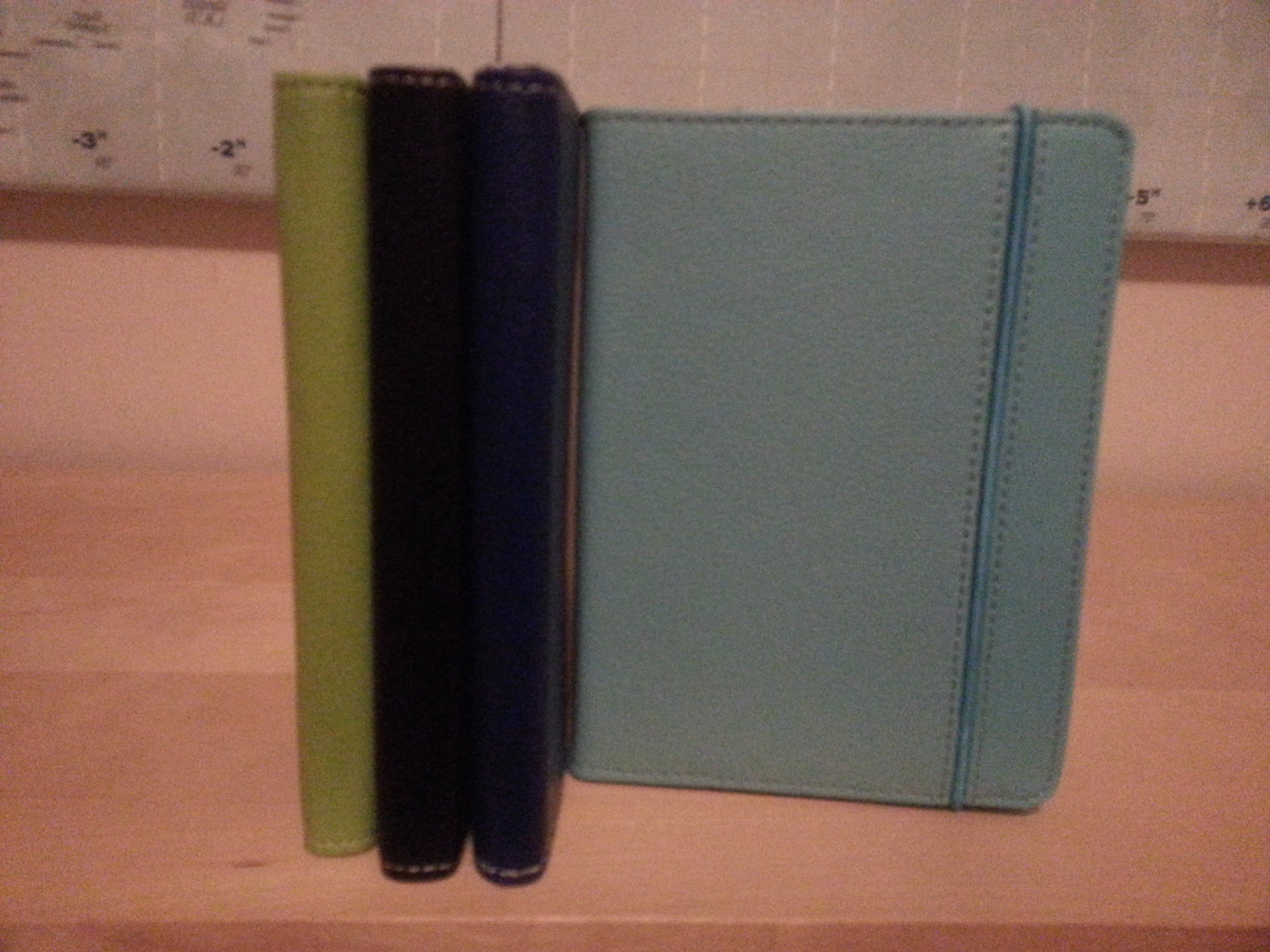
Jo went above and beyond. Not only did she donate a Kindle 2, but she also donated an original Kindle and five cases, too! There’s part of her donation over to the right! I’m excited to offer the original Kindle over the summer to a particularly avid reader. The cases are also a substantial contribution; after all, they’re crucial to protect the Kindles, and they’re pricey. Thank you, Jo!
And that’s not all. There are also rumors of more Kindles coming in! I predict three more Kindles in the first week of the new year. Stay tuned.
(In case you know people who might want to donate their Kindle, send them to the easy-to-fill-out form!)
2. Donors are purchasing books directly from the Amazon Wishlist.
It has been great to see how many people want to donate their Kindles, but others are finding that contributing books is another way to get involved.
I’m pleased to report that people are beginning to use the classroom’s Amazon Wishlist to purchase individual books. Right now, there are 17 books on the list that students have requested, and contributors can read the descriptions and buy a title immediately. It’s quick and easy: You purchase the book, and I get it in my email inbox, ready to transfer to the Kindles. (The only problem: The automatic email doesn’t include your email address unless you type it into your note to me. Please do so I can thank you!)
Just last night, in fact, I received the generous donation of The Emperor of All Maladies from LeAnne in Fremont, California! This excellent book was requested by a student whose mother is battling breast cancer. Now he can read the book when he gets back from Winter Break.
LeAnne also followed Iserotope on Twitter and Facebook (another way to get the word out there) and may donate her original Kindle, too! That’s impressive. Welcome to the growing Kindle Classroom Project community, LeAnne!
3. I’m getting ready for the shipment of 10 Kindles!
You may have read last update that 29 generous donors teamed up to contribute 10 Kindles through a large DonorsChoose project. That shipment is coming in early January, so this week, I took time to find the best cases for them.
This turned out to be much harder than I anticipated — for two reasons. First, Kindle cases are very expensive (most of the time, for no reason). No, I’m not going to spend $30 for a case to protect a $69 Kindle. Second, there isn’t much of a selection of cases for the latest-generation Kindles. Maybe Amazon and the other companies feel there is more demand for Kindle Fires?
But after a little research, I found something promising: the mCover Leather Folio Cover Case from iPearl. (There they are over on the right.) No, there’s nothing leather about it, and I find it funny that iPearl calls it a cover and case at the same time, but this $7.99 case does the job. Using the generous $1,000 donation from DSW, which I’m finding invaluable to build the project’s infrastructure, I bought five of these cases this week and will buy five more tomorrow. That way, when they arrive, all 10 Kindles will immediately get into the hands of students.
4. The Kindle Library has moved past the 170-book mark.
Wasn’t it just a few months ago that the library included just 130 titles? Well, things have changed a lot. Getting a Kindle in the mail will always be exciting, but what’s perhaps more important is making sure that students have good books to read.
Here’s why having a good classroom e-book library is so crucial. Many of my students are reading books for the first time in years. They come to the end of a book. They’ve liked it. And they don’t want it to end because they fear they won’t find another book like it. Reluctant and emerging readers do not have “next lists” and “to be read piles,” and it’s up to the teacher to connect that reader to the next great book. I’m pretty good at it — but only if I have the books.
That’s why I’m so appreciative of LeAnne of Fremont and Imene of San Francisco and the others who have donated money for books (over on the Contribute page). The library now stands at 171. Here are a few of the new books, all requested by students, in the e-book library.
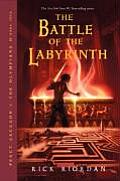
An aside: If you want good books to read, you might follow what my students are reading! They choose very well. (I liked Sold and Gone Girl. I can’t say that I’ve read much of Rick Riordan. They involve wizards, right? Wizards confuse me.)
Thank you for reading this update! There is a lot going on, and I’m hopeful that this momentum will continue into 2013. Please let me know your thoughts, concerns, and ideas.
What am I missing? Apparently, a lot — I didn’t much care for the book.
Or maybe it’s just that I preferred Mr. Green’s other books — An Abundance of Katherines and Looking for Alaska, to name a couple.
This might sound insensitive, but I didn’t feel sympathy toward the main character, Hazel, who is dying from cancer. It’s clear that she doesn’t care much for the typical platitudes that accompany conversations about cancer. Hazel would rather get to the honest truth: that we live and die, that death involves oblivion, that there is no heroism in fighting cancer, that pain needs to be felt, and that there aren’t side effects to cancer — rather, there are side effects to dying.
Even when she meets Augustus at a support group and they fall in love, Hazel remains snarky. I mean, I suppose that a teenager dying from cancer deserves to be snarky, but this is typical for narrators in young adult literature. Perhaps my students would identify with Hazel’s personality, but mostly I found Hazel a bit mean, especially when she meets the author of her favorite book.
Most important, I don’t see my students reading this book. A few of my students have parents who are battling cancer; I’m not sure this book would be appropriate. And like many YA books, this one seems targeted to a White audience. That doesn’t mean, of course, that African American or Latino students couldn’t find this book valuable. It’s just that there would be many other books for them to read first.
While I applaud Mr. Green’s effort to offer a different kind of book about cancer, The Fault in Our Stars misses the mark. Of course, I could be entirely wrong, and I know that there are thousands of people who disagree with me. Please feel free to leave your thoughts in the comments, and maybe I’ll be enlightened!

 The Kindle Classroom Project isn’t the only reading intervention program using e-readers. Over in Australia, a group has begun the Indigenous Reading Project, aimed to improve the reading achievement of Aboriginal and Torres Strait Islander students.