Craigslisters love the Kindle Classroom Project

favicon I’m always happy when a stranger donates to the Kindle Classroom Project, whether that means donating a Kindle, making a cash contribution, or supporting a project on DonorsChoose.

But one of my favorite things is when a random person on Craigslist agrees to meet with me and hand over their Kindle.

I started asking for Kindles on Craigslist last year, and at the beginning, I wasn’t so successful. But lately, things have changed. I don’t have any hard data on this, but it seems like I’m getting somewhere around a 5% yield rate right now.

The process is pretty easy, actually. I’ve set up an RSS feed that automatically sends local Craigslist posts for Kindles to my Feedly / Digg Reader. The going rate for Kindles on Craigslist is about $40.

Here’s the email that I send them:

Screenshot 2014-04-12 11.42.02

And then I wait. Usually, nothing happens, but sometimes, I get a response. (I think the links help; it makes me look legit!) We arrange a good time and place to make the transaction, and that’s that.

The best thing is that everyone has come through so far. I get there, the person is usually already there, prompt and prepared, we say hello, sometimes there’s a handshake, and then the Kindle is exchanged.

Except it’s not really exchanged — because I don’t have anything to give them except my thanks. Maybe that’s the next step. Perhaps I need to give them something physical. A thank-you card, maybe? They don’t really seem to care either way, I don’t think.

And then it’s done. The 10- to 15-second interaction results in joy both ways. The Craigslister is happy to donate, and I’m happy that another student gets his or her hands on a Kindle. favicon

It’s simple: You have to have books

sorry-we-are-closedfavicon This morning I read this blog post by Laura Robb, a literacy coach in Virginia. Her argument is that the biggest problem we have with reading is the “persistent inequalities” between resource-rich and resource-poor schools. In other words, independent and suburban schools have libraries, librarians, classroom libraries, and tons of books, while their urban counterparts do not.

Yes. Ms. Robb is correct.

In order to read well, you need a text-rich environment. That means books. But most urban public high schools don’t have very many books.

If you’re lucky, you might find a school library, but it’ll be understaffed, plus students, long disaffected with reading, largely won’t visit. It’s not cool.

The answer, of course, is to build classroom libraries, but most of this work is not central to schools. It’s an afterthought. Even well-intentioned teachers don’t have the time or money to buy books for a classroom library. Sure, it’s possible, and there are some teachers who go out of their way, but real change happens only with school-wide efforts.

That’s why one of my side projects is to help teachers get books into their classrooms. It’s pretty easy. At all times, I have a project up on my DonorsChoose page. Right now, my goal is to get five copies of the 20-most-popular books for ninth graders. In just one month, generous contributors have donated 18 titles. That’s nearly $1,000 in donations, mostly from total strangers.

Here’s the list of the 20 books, in case you’re interested. (Note: I may modify this list after getting more survey data from current ninth graders.)

After the current project is funded (hint hint!), I’ll decide which teacher gets the 100-book mini-library. It’s not a lot of books, sure, but it’s a jump start, and it’ll look impressive. (By the way, I encourage you to donate. The DonorsChoose site is easy to navigate, and your $10 means 1 book.)

And then the process will start again — for another teacher, another classroom, and another group of students. Please let me know if you’re interested in helping! favicon

Just a quick tweet…

Go ahead, follow me on Twitter! Or contribute to the Kindle Classroom Project!

Schwag from Phi Delta Kappan!

favicon Yesterday I received my five complimentary copies of Phi Delta Kappan with my article in it! That was exciting.

And so was this in the mail today:

2014-04-04 14.29.53

It’s a little wrinkly, but you get the idea.

But here’s my favorite part. I got some sticky notes from Kappan, too.

2014-04-04 14.30.15

That’s my favorite.

A few folks have asked about reading the article, which is kind. If you’d like to read it, email me at mark (at) iserotope (dot) com, and I’ll show you how you can access it.

My favorite part of the letter: “We hope you’ll consider us for another manuscript in coming months or years.” I hope so, too! favicon

Beyond the Code of the Streets

See on Scoop.itIserotope Extras

Among young black men who’ve made it, the Code of the Streets still exerts a pull.

Mark Isero‘s insight:

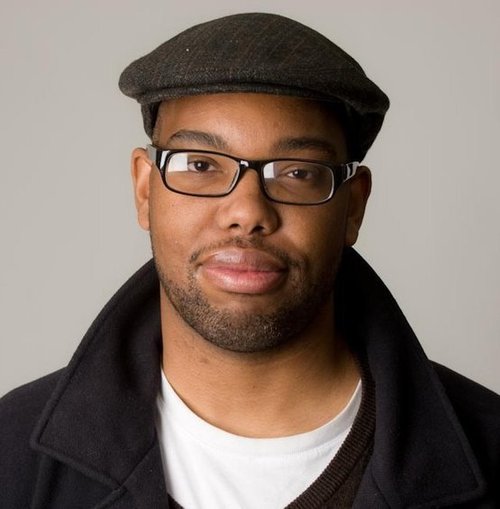
This personal narrative is almost a year old, but I found it today while following the debate between Ta-Nehisi Coates and Jonathan Chait on "the culture of poverty" vs. "black culture." Mr. Coates is an extraordinary writer. English teachers should assign this essay.

See on www.nytimes.com