Advanced book banning in Idaho: Calling the police on Absolutely True Diary

parttimeindianfavicon Friend and loyal Iserotope reader Sarah (Logan, UT) sent me an article today that boggled my mind (a little bit).

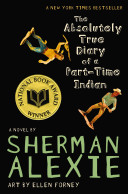
Apparently, the folks in Meridian, Idaho do not like Sherman Alexie and his extremely popular book, The Absolutely True Diary of a Part-Time Indian. Earlier this year, parents complained about the book on moral and religious grounds, and the Meridian School Board pulled the title from the district’s 10th grade supplemental reading list. According to the Idaho Statesman, trustees said they would try to find a replacement similar to True Diary but at a higher reading level.

So far, nothing is surprising. There are tons of school districts that ban books. A few years ago, Tucson infamously censored a large list of books by and about Latinos. My second year of teaching, district officials in Fremont, California pulled Richard Wright’s Native Son right before my co-teacher and I were about to teach the book.

But the story gets weirder. Teens in the community protested the decision, and a local bookstore raised enough money to purchase 350 copies. High school student Brady Kissell then distributed the books in a public park as part of World Book Night on April 23.

Brady is awesome. Here’s a picture:

brady kissel
OK, just one more aside before I get to the weird part of the story. World Book Night looks pretty much awesome. I think I’m going to help out next year. Here’s its mission:

World Book Night U.S. is a celebration of books and reading held on April 23, when 25,000 passionate volunteers across America give a total of half a million books within their communities to those who don’t regularly read.

All right, let’s proceed. So apparently, Brady was giving out books, tons of them, and teenagers from Meridian were snatching up copies, so many that the books nearly ran out, and there likely was joy.

Then an adult called the cops.

According to a Boise news station, the police said that “someone [was] concerned about teenagers picking up a copy of the book without having a parent’s permission.”

This is just strange. And ludicrous.

And sad, really, for a number of reasons, including: (1) Diary is a fantastic book, one of the best for high school students, especially ninth grade boys of color, (2) I haven’t met a student who doesn’t like the book, (3) It’s superbly well written, partly because of the themes Mr. Alexie explores, and partly just because the writing is so incisive, (4) There are many more reasons.

Please, one more aside: If you haven’t yet, Please read this essay, “Why the Best Kids Books are Written in Blood,” in which Mr. Alexie explains how True Diary and other books with challenging content can transform young people’s lives. (The article is also on Iserotope Extras, where I share my favorites.)

I understand that parents are afraid that their children are going to be exposed to values antithetical to their moral and religious beliefs. It’s tough to be a parent who, say, doesn’t want to discuss topics like masturbation with your child, and then your son or daughter, maybe at the dinner table one night, busts open the page of True Diary where it’s discussed and goes on to tell you the book is required reading for English class.

That might be stressful, but the answer, in my mind, is never to censor — not in schools, and definitely not in a public park. (The police were confused, by the way, by the emergency call. Handing out free books is not a crime.)

The story ends well. No one was arrested; no books were detained. In fact, Hachette Book Group, the publisher, bought 350 additional copies to distribute in Meridian.

This is sort of a rambling post, but I just wanted to get some of my ideas out there. There are also several unanswered questions. For instance, I’d love to know more about the process by which the parents raised their concern. Was the book even being taught in the schools? If so, did the parents approach the teacher first?

What are your thoughts? In what cases, if any, should books not be allowed in schools? Should books with controversial themes stay out of the classroom but maybe be allowed in the library? I’d love to open this up (in the comments!) for a spirited and respectful conversation.

One last thing: Thanks, Sarah, for the article! Got me thinking. favicon

For students, Google Keep > Evernote

googlekeepfavicon Though I’m an Evernote user (sort of), and I understand how powerful the application is, I think Google Keep is a better service for students.

Why? It’s just easier. And it’s colorful. And it works on phones and computers (like everything else, I guess). And you don’t need to sign up for anything extra if you already have a Google account. Compared with Evernote, it’s just quicker. (Sure, it doesn’t do as many things, but most students don’t need Evernote.)

Google Keep’s tag line is “Save what’s on your mind.” You can save notes, photos, and audio. You can save to-do lists. It’s pretty simple.

Here’s a quick video:

For students, this means a lot of things. I can see students using Keep to:

  • Write down homework,
  • Take (brief) notes,
  • Take pictures of assignments or important information on the board,
  • Record think-alouds or other assignments involving speaking,
  • Jot down URLs of key websites they want to remember,
  • The most important thing: Not lose things.

The only problem with Keep right now is that there’s not a clipper where you can capture content from the Internet. (There used to be an extension, but it’s no longer.) You can’t, say, highlight a piece of text or save a picture from a website. Of course, Evernote lets you do everything, but my sense is that very few students are going to use Evernote unless teachers really push it.

(The teachers I coach use Google Drive instead, which is of course different from Evernote, but it just makes sense to keep things simple and stay mostly with the Google suite unless necessary.)

One of the biggest challenges is that very few people know about Keep, and like all Google products, there’s no guarantee that Google will keep it.

But if you’re a teacher who has Chromebooks in your classroom, or if you’re at a school that allows smartphone use, give Keep a try and let me know what you and your students think.

Side note: I originally posted about Google Keep in March 2013, when I declared that it wasn’t “an Evernote killer.” Well, I still don’t think it is, but I do think it’s a good thing for students. favicon

Typing Speed Monitor: A great way to track your typing speed

favicon I like typing. Some people, especially my former students, remark that I type quickly. In seventh grade, I was the second-fastest typist in my middle school, at approximately 72 wpm on a manual typewriter. (Millie was No. 1 and pretty much unbeatable.) (Mrs. Schaeffer taught us well.)

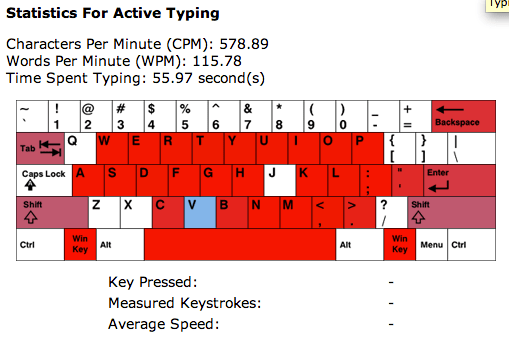
Today I came across Typing Speed Monitor, a Google Chrome extension that keeps track of your typing speed and trends. There’s no way for me to tell whether it offers accurate feedback, but so far, I like what it’s telling me. (See below.) Typing (The only problem with this extension is that it might make me freak out and always want to type fast. Like, right now, I’m trying to type fast.)

I’m thinking that students might like this extension. If students have Chromebooks, and if they have their own log in, then they can install this extension and see how their typing speed is improving (or not). Now I just have to keep my speed above 100 wpm. favicon

Recommended Reading: “A Walmart Fortune, Spreading Charter Schools”

favicon Motoko Rich makes another excellent contribution to reporting about the charter school movement. In “A Walmart Fortune, Spreading Charter Schools,” Ms. Rich tracks the Walmart Foundation’s investments to large charter networks, like the Knowledge is Power Program (KIPP).

Excerpt
“WASHINGTON — DC Prep operates four charter schools here with 1,200 students in preschool through eighth grade. The schools, whose students are mostly poor and black, are among the highest performing in Washington.”

Ms. Rich reports that the majority of students in Washington D.C. now attend charters. That’s astounding. The same is true, I believe, in New Orleans.

She also succinctly summarizes the criticism of charter schools:

Critics say that Walton backs schools and measures that take public dollars — and, some say, the most motivated families — away from the existing public schools, effectively creating a two-tier educational system that could hurt the students most in need

I’ve worked in charter schools for most of my career. But they haven’t been part of a large charter network. There is a difference, I think. Part of the difference, of course, is how much backing a large network can get. But especially interesting to me is how few really, really rich people are funding and therefore orchestrating this nationwide movement.

The past month or so, whenever I read about private funding for charter schools, it’s always the same people. And the Walton Foundation is at the front. As Ms. Rich reports, the funding goes from Walton to Teach for America to KIPP, with a little left over for New Leaders for New Schools.

Source: http://j.mp/1hATMMj. You can also find this article at Iserotope Extras, a curated list of my favorite articles about teaching, reading, and technology. favicon

Recommended Reading: “The League of Extraordinary Black Gentlemen”

favicon In “The League of Extraordinary Black Gentlemen,” Theodore R. Johnson argues that the W.E.B. DuBois construct of the Talented Tenth has not rid African Americans of a sense of double-consciousness. It is as burdensome, Mr. Johnson suggests, to be asked, “What does it feel like to be a part of the solution?” as it was to be asked, 100+ years ago, “What does it feel like to be part of the problem?”

Excerpt
“As an upper-middle-class black male, I am seen as part of the solution class tasked with rescuing my nation from its problem and my race from itself.”

I recommend that English teachers have their students read this excellent piece along with W.E.B. DuBois’s “Strivings of the Negro People.”

Source: http://j.mp/1gZocIL favicon