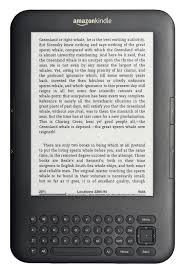
The school year is almost over, which means it’s time for teachers to get their classroom library books (and Kindles!) back from their students.
Because everyone is so busy and tired, it’s easy to say something like this: “If I don’t get my books back, at least I know that they’re in good hands.”
This is the wrong approach! You have to get your books back! But that’s easier said than done.
Here are a few things to do:
1. Start early. May 1 is a good start date. Even though you want your students to read up until the end of the year, it’s a good idea to begin the book-returning process a month early.
2. Have a good circulation system. If you know which books are out, and if your students know which books they have, then getting books back is much easier. It doesn’t matter if you use a computerized system or a simpler paper system. The most important piece is that your system is accurate and dependable. Again, this isn’t easy to do. Some teachers employ student librarians to make sure everything is accurate. Other teachers have more elaborate systems. Whatever you do, it’s worth it to make sure that your check-in / check-out system is strong.
3. Don’t relent. Your students may say, “I returned that book.” Don’t believe them, but not because you don’t trust them. Often students don’t remember that the book is underneath their bed. The key message is that you’re following the records, and the account says that there is a book checked out to the student. It’s up to the student to take care of it.
4. Emphasize the concept of borrowing. Yes, you loaned all your books to your students, and you loved it when they became real readers. But they’re your books, not theirs, and it’s important that the books are ready for your students next year.
5. Take data, make deadlines, and remind often. Publicly display how many books are still out. Give students individualized reports about which books they need to return. Have deadlines throughout May, and after each one, remind students what they need to do. If necessary, call parents.
Here are a few things NOT to do:
1. Don’t get angry. By mid- to late-May, you may become frustrated that you’ve reminded a student two or three times to return a book and nothing has happened. Instead of getting angry, have a plan. What are you going to do after the first reminder? the second? the third? Stick to this plan and communicate it to your students.
2. Don’t forget the public library. Make sure your students have a library card. Go to the library with them. Many students fear the library because they think the librarian is going to detain them for outstanding fees. As a result, many don’t have current library cards. At the end of the year, it’s important for you to help students make a transition between your classroom library and the public library. It’s the same thing, really, only bigger. If you help convince students that the public library is a safe place, then they’re much more likely to grow their identity as readers.
3. Don’t wait too long to do book bills. Fill them out a week or two before the end of school. This will give time for students to find the book or come up with a different solution. Often, students don’t begin looking for books until there is a penalty fee attached.
There’s my list. Good luck getting your books back! Do you have other ideas about how to encourage students to return books? If so, please leave them in the comments. Thank you!
When you’re starting to build a classroom library, one of the best ways to find high-interest books is to ask your students what they like.
It’s not always best practice just to ask them with no context, though. If they don’t see themselves as readers, they may request a book they read several years ago, like A Child Called It or The Giver. That’s no good.
What is better is to team up with your local public library and put on a Book Faire. I’ve written about the Book Faire at Envision Academy in Oakland. It’s great. Students browse about 150 books and then fill out a slip of their top three requests. Then, if you have the money, you buy some!
Take a look at a few of the most-requested books from last month’s Book Faire in Oakland!
Any surprises? For me, there’s nothing shocking about The Absolutely True Diary of a Part-TimeIndian, Life in Prison, or Perfect Chemistry. But I didn’t expect Hunger Games to still be so popular.
On the other hand, I was pleased that Zom-B, Monument 14, and Article 5 made the list. Students everywhere still like zombie-filled, post-apocalyptic, and dystopian tales. Why not? (I liked Zom-B.)
The only non-memoir nonfiction title in the group, Buzzed is an excellent resource for students who want “the real truth” about drugs. It makes me happy that it’ll be checked out. wtf, maybe not so much (though I haven’t tried it yet).
Please let me know what you think of the students’ requests! Did they choose well? Have you read (and enjoyed, or hated) any of these books? And feel free, as always, if you feel the urge, to buy a few for my students over at their Amazon Wishlist!
Hey, this little series, “Get Your Students to Love the News,” is becoming a real thing! Today is the sixth installment. When you have time, be sure to check out the other posts, too.
A few posts ago, I emphasized that when it comes to reading the news, there’s nothing like the real thing: an old-fashioned newspaper or magazine, preferably in print (though that’s not a requirement).
But this is not exactly easy to make happen.
Reason #1: It’s expensive. Let’s say I get a class set of The New York Times in print, weekdays only, from September through May. That’s $3.50 a week, 35 weeks, 25 students, or $3,062.50. Impossible.
Reason #2: That’s a lot of paper to recycle! Unfortunately, most newspapers won’t deliver just once a week. A good alternative would be to try a weekly newsmagazine, like Time. But it’s still not cheap. Twenty-five copies at $35 a year runs you $875.
Reason #3: Newspapers and magazines might be too hard for struggling ninth graders to read. Sure, we should challenge them (with individual articles that we find), but it’s also a great feeling for students to be able to read on their own.
Despite all those reasons to give up on print periodicals, please don’t! I have a great solution for you. It’s called The New York Times Upfront.
A Scholastic publication, Upfront takes real articles from The New York Times, modifies them for middle- and high-school readers, and reassembles them in a tidy and colorful magazine format.
What’s also great is that Upfront comes out 14 times a year. That’s a good number of issues. Not too many, not too few.
The articles are done well. Let’s take a look! Here’s one from January after the death of Nelson Mandela.
And here’s one about the anniversary of Tienanmen Square:
Upfront does a good job adding key maps, timelines, and images to help students gain background knowledge, a crucial ingredient in nonfiction. (Kelly Gallagher says so, and so do I!)
Also, Upfront is affordable. A class set of 25 copies will cost you $275 for the year. That’s a doable price.
One of my esteemed colleagues in San Francisco, Marni Spitz, is using Upfront this year with her ninth graders. She’s an excellent Global Studies teacher who believes deeply in the power of reading. Marni loves Upfront!
To be sure, Upfront is not perfect. I want to get my students — even the really struggling ninth graders — to the real version of The New York Times as soon as possible. And I do! But until that happens, Upfront is an excellent scaffold, a great way for students to find success.
If you’ve used Upfront in your classroom, please let me know what you think! You know it’ll be enjoyable.