Ruth (Sunnyvale, CA) donates Kindle #162 to the #KCP, a Kindle Keyboard. Thank you very much, Ruth!
— Mark Isero (@iserotope) August 28, 2014
Go ahead, follow me on Twitter! Or contribute to the Kindle Classroom Project! 
Ruth (Sunnyvale, CA) donates Kindle #162 to the #KCP, a Kindle Keyboard. Thank you very much, Ruth!
— Mark Isero (@iserotope) August 28, 2014
Go ahead, follow me on Twitter! Or contribute to the Kindle Classroom Project!
Mary (Parkersburg, IA), generous #KCP sustaining contributor, just donated 4 GONE series e-books by @MichaelGrantBks. Thank you so much!
— Mark Isero (@iserotope) August 26, 2014
Go ahead, follow me on Twitter! Or contribute to the Kindle Classroom Project!
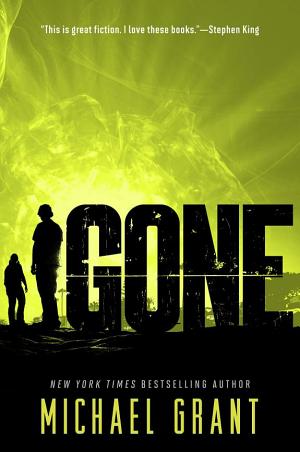
 Two days ago, I learned that students are very interested in Gone, the dystopian series by Michael Grant where everyone over 15 suddenly disappears.
So I quickly wrote a DonorsChoose proposal to fund five copies each of the six titles in the series. Just 12 hours later, Toni (Cary, NC) came through for the second time this week. Her generous contribution means that students at all five KCP schools will have a physical copy of the entire Gone series to browse before reading it on their Kindle.
Except there’s one problem: Gone is not yet on the Kindles.
That’s where you come in! For $42, you can purchase all six e-books in the series and have them available to all 161 Kindlers. Not a bad investment, right?
Update: It looks like two e-books have already been donated! The remaining four cost $25.86. (Thanks, Generous Donors, though I haven’t identified you yet!)
Update #2: All six GONE books are now donated, thanks to Mary (Parkersburg, IA). Mary is a long-time sustaining donor to the Kindle Classroom Project, and I am very grateful that she has come through again. It’s amazing and heartwarming that this post went out just a few hours ago, and already, Mary has taken care of business! Thank you again, Mary!
What’s even better is that when you buy an e-book, it can never be lost or tattered or destroyed or well-worn or stolen or defaced or written in or dogeared or any other bad things that sometimes happen to physical books. Your donation remains in mint, pristine condition no matter how many of the 161 Kindlers this year read the Gone series!
If you’re in the mood to take care of business, head on over to the Kindle Classroom Project Amazon Wishlist. You’ll see the books listed. Buy one or buy them all! Make sure to send them directly to iseroma at rocketmail dot com. And identify yourself so I can thank you! If you have questions, please let me know in the comments.
With your help, I can surprise the students this Friday that the entire Gone series is up on the bookshelf and in all of their Kindles.
 I taught for 15 years, and now I’m an instructional coach, which means that few people (especially outside education) know what I do.
Lately I’ve been practicing my answer to the inevitable “What do you do?” question that comes up at dinner parties and other events. In fact, someone in the yogurt aisle at Trader Joe’s asked me that question last week. There I was, ready to debate the merits of Fage (superior) vs. Chobani (inferior), but no, this person wanted to know about my job.
Here are a couple things I say:
+ “I help teachers teach better.”
Though it’s a bit presumptuous — after all, I try to show up as a colleague rather than an expert — this response gets the point across. The problem with this answer is that it assumes that the teachers with whom I work need to improve, which is not true. They’re already great.
+ “I help teachers like teaching more.”
I’ve met a lot of teachers, and they do it out of a deep love of learning, students, and social justice. But there’s also a lot of pain in teaching. My job is to mitigate that pain and to help teachers hold onto what’s in their heart. There should be plenty of joy.
+ “I help great teachers stay in teaching longer.”
This one is related to the one above. The teaching profession, especially lately, is not respected at all. It pays piddling. The work is excruciatingly challenging. The current nationwide discourse on education makes teachers the scapegoat for our country’s ills. Despite the disrespect, the fact of the matter is that our young people need as many strong teachers to stay in the profession as long as humanly possible.
Where I work, my coaching colleagues and I talk about what we do, why we matter, and how we know whether we’re making a difference. Usually, we try to tie our efforts to student achievement, as in, we should see a link between our coaching and increased student learning. I think that’s important, but what I also think is a key metric is whether teachers feel effective, joyful, and alive — and whether they stay.
Which response do you like the most? Or, do you have a better answer? Please let me know your thoughts! Also, if you’re a teacher, I’m interested in whether you feel you’ve had a productive coaching relationship. My sense is that they are far and few between, and that’s partly why many school districts don’t yet invest too much money into coaching.
Research on e-readers in schools (#2)
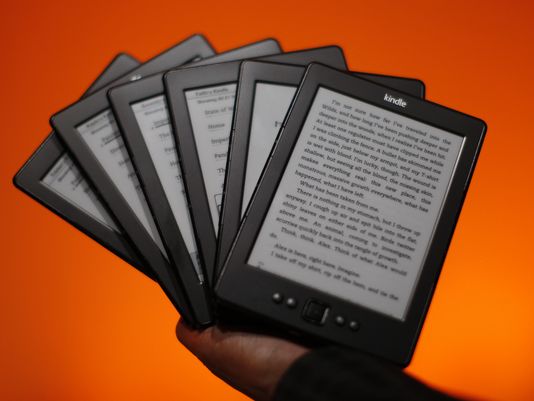 My good friend Pete sent me this article last week, which summarizes a forthcoming study that suggests that students reading on Kindles comprehend less than those reading on paper.
This debate has been a fiery one ever since e-readers first emerged in 2007. I think it’s an important debate.
But I also think it’s important to look at what the latest study does and doesn’t say. New York Times reporter Stephen Heyman’s “Reading Literature on Screen: A Price for Convenience” does a good job getting down to details.
Some background:
+ The study involved 50 graduate students from Norway and Sweden,
+ The students read a 28-page short story,
+ The students read on a Kindle DX. (Do those still exist?)
Some findings:
+ Students reading on Kindles had similar emotional responses as students reading on paper,
+ There was no significant difference among the students on questions involving the short story’s setting, characters, and plot,
+ Students reading on Kindles did significantly worse reconstructing the order of major plot events. Students reading on paper did much better.
Based on this study, lead researcher Anne Mangen at the University of Stavanger in Norway believes that there is something about the tactile experience of handling paper that helps the brain keep track of plot:
When you read on paper, you can sense with your fingers a pile of pages on the left growing, and shrinking on the right. [The differences for Kindle readers] might have something to do with the fact that the fixity of a text on paper, and this very gradual unfolding of paper as you progress through a story, is some kind of sensory offload, supporting the visual sense of progress when you’re reading. Perhaps this somehow aids the reader, providing more fixity and solidity to the reader’s sense of unfolding and progress of the text, and hence the story.
Though her study included just 50 students, and those students were 20+ years old, Prof. Mangen might be right. It’s altogether possible that reading on paper is superior to reading on E Ink, especially when it comes down to high-level reading comprehension. By no means do I think that we should eradicate physical books in schools.
But I also think it’s crucial not to go crazy and call for the immediate destruction of all Kindles.
If you’re an English teacher, and you want students to do a close read of a challenging text, the Kindle is not for you.
On the other hand, if you’re an English teacher, and you want your students to read voluminously, and to like reading, and to choose their own books, and to build an independent reading program, and to help struggling readers find their place, I’m pretty certain that it doesn’t matter if you choose Kindles or physical books.
As I’ve emphasized many times, I’m not particularly interested in any debate that has an either-or answer. If the question is, Should students read on Kindles or on paper, I say, Both.