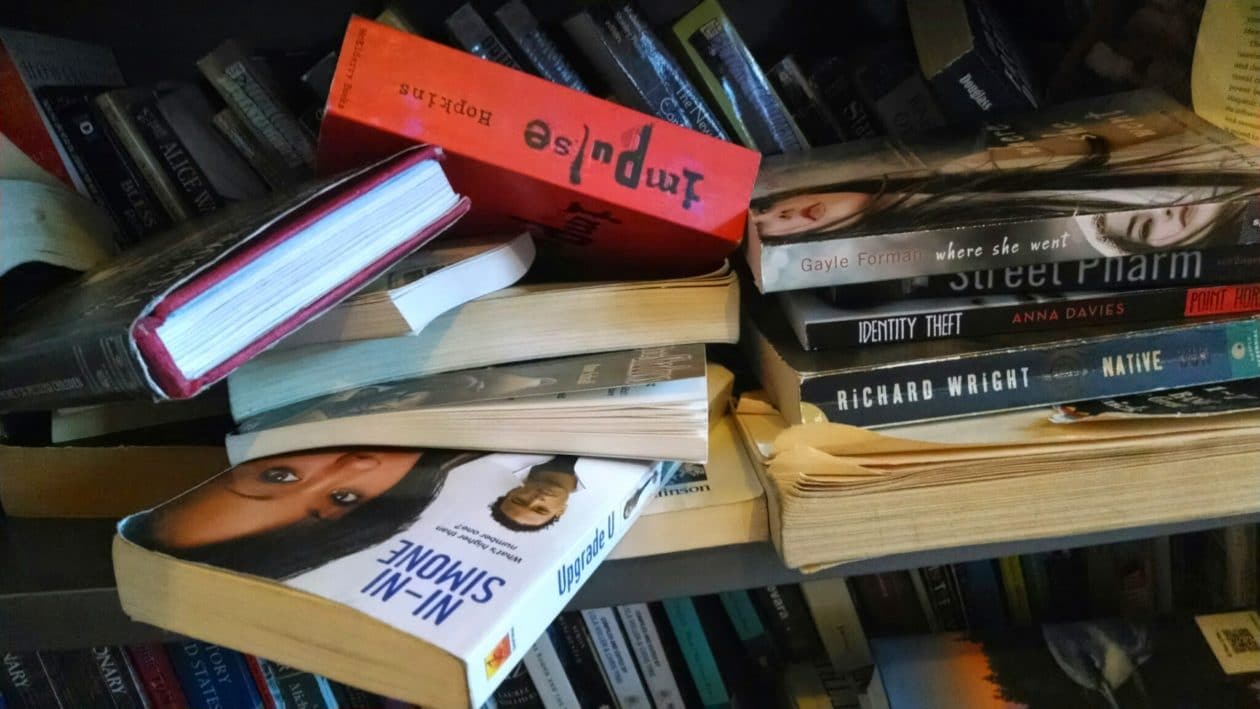
What’s sad is that there are tons of great books here. But they’re in disarray, strewn about, all in crazy directions. Not good.
I understand why this happens: The teacher is likely overwhelmed, working too hard, running around all day, shushing students, making copies during passing period, and trying to survive.
Of course, this inference may be untrue. But from the looks of this library, my gut says that this teacher is pretty stressed out. And it’s likely that the students aren’t doing a whole lot of reading.
Maybe I should do a TV show called “Classroom Library Makeover,” where I go around and save classroom libraries like these. My first tip for this one: Sign up a student librarian to keep the shelves in check. It’ll take just one day for the books to be beautifully displayed again.
Ed. note: Marni Spitz teaches U.S. History and Reading Lab at City Arts and Technology High School in San Francisco. This is her third post for TEACHER VOICES. Donate to Marni’s classroom!
Numbers. I love numbers. They mean so much. They can mean good luck, dates of birthdays, years of anniversaries, and how many spoonfuls of sugar you need in order to make the best chocolate chip cookies ever. So to all those number-loving educators, I, a Humanities teacher, salute you!
Numbers come up a lot in my U.S. History and Reading Lab classes. They teach us so much! Question: When was the Declaration of Independence signed? Answer: 1776! (a number!) Question: What resolved the debate over the representation of slaves in the House of Representatives? Answer: 3/5th Compromise (another number! a fraction at that!)
In Reading Lab, a new class we’re piloting with our ninth graders this year, numbers are coming up all the time. Some insight: I use numbers to track my students’ pages on their independent reading books each day. My students use numbers to find quotes for their metacognition journals. We use numbers to set goals for reading and to chunk our reading.
But perhaps the best number of all so far has been the number of books students are finishing. That’s right. My Reading Lab-ers are voraciously reading and FINISHING their books. It’s honestly incredible!
After FIVE days of class (five, another great number: high fives! Five Guys Burgers! Five Spice Girls!), THREE of my students had already finished their books! THREE out of FIFTEEN in ONE week! The next week, there were another THREE, and the following week, FOUR more! By week six, ELEVEN out of FIFTEEN (that’s 11/15 for all you fraction lovers!) had finished a book. Some students have even finished more than ONE book!
I know that you’re thinking: But we’re only in week SEVEN! And your students are in a reading intervention class! I thought they don’t even like reading! How the heck is this happening?!? Well guys, I don’t have a scientific explanation just yet, but I have spent some time pondering this incredible phenomenon. Here’s what I’ve come up with as to why my Reading Lab-ers are finishing books with Usain Bolt speed:
(FYI, these are in no particular order as I am not here to make numbers feel above/below each other. Hahahahaha — get it? I crack myself up.)
1. Our kids have access to AWESOME BOOKS!!! SO SO SO MANY AWESOME BOOKS!
If I do say so myself, my classroom library is amazing! We’re talking Beyonce dance moves amazing. This has everything to do with the books on the shelves and very little to do with me (although I love to take credit). With the help of my literacy coach (I’m talking about you, Mark!), DonorsChoose.com, and our charter network’s commitment to books, my classroom library is rich in variety of genre and level. And…the books are so new and so so pretty! Sure, we know that in most instances, looks don’t matter, but whoever said not to judge a book by it’s cover hasn’t worked with a group of struggling teenage readers.
2. I KNOW my classroom librarylike Indiana Jones knows how to rock cargo.
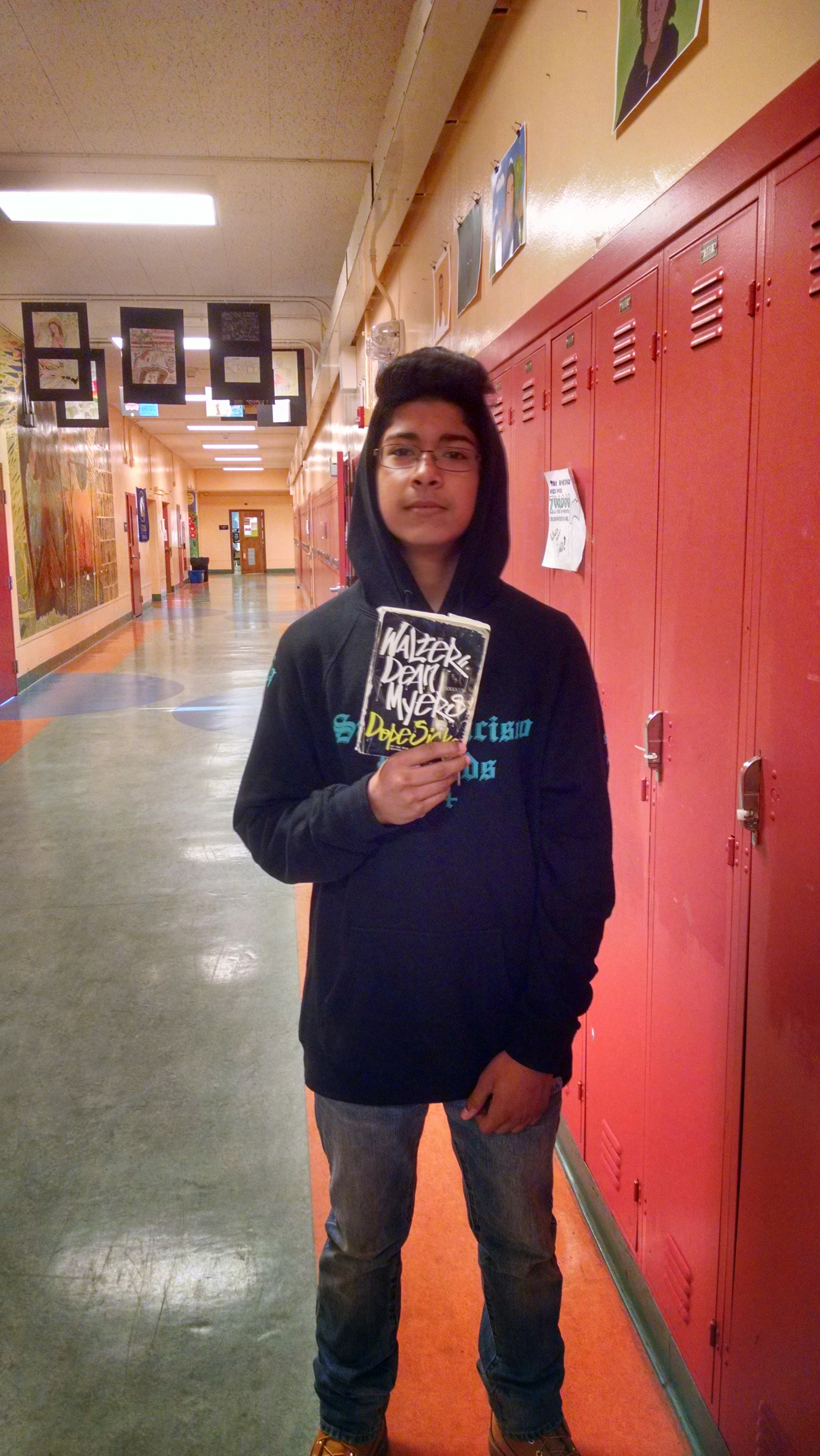
My first year with a classroom library was wonderful, but I had never read most of the books in it, nor had I beared witness to the effects each book had on its readership. As my library continues to grow, the more familiar I am with the heavy hitters. (For example: Perfect Chemistry will win every time! The Bluford series is a gem for confidence-boosting! You liked Dope Sick? I think you’d love Tyrell!). My librarian skills have really picked up and I am developing a niche for being a book-student matchmaker. My Grandma would be so proud!
I also spent a lot of time reorganizing my library this summer so that I can navigate my shelves with the grace and stamina of Michael Jordan. Just call me #23. (There I go with the numbers again). Something as simple as knowing where the books are has made the book-student matching process far more effective! I can quickly direct a student to the “Fight The Man!” bins on the left, the “Back in the Day” bins in the middle, and the “Ulysses” bins on the top shelf. (Okay fine, we’re not quite there yet, but we’ll get there!)
3. The students are reading their books in a lot of their classes. A LOT.
They’re reading in English. They’re reading in Advisory. They’re reading in Math. They’re reading in Biology. My reading Lab-ers are getting so much time to read their books at school, thanks to the incredible commitment of the ninth grade team!! When asked about reading at home, most of my students said that no, they didn’t read at home and never really had. At this point in the school year, whether or not my kiddos are reading their books at home is still unclear, but what is clear is that structured and routinized reading is happening in multiple classes.
Having their independent book with them is as essential as their pens, binders, and enthusiasm. Words cannot express what a joy it is to walk in the hallways during my prep, eat my snack (that’s what preps are for right?), and peek into ninth grade classrooms and see them reading. You can just FEEL the pages turning!
4. Reading is part of ninth grade culture!
It’s alive! It’s alive! (And, unlike Frankenstein, it’s far from terrifying. In fact, it’s arguably the most beautiful thing ever.) It’s alive in the hallways (student book reviews!), in signs on teachers’ front doors (Ms. Y is currently reading…), in passing conversation (“Have you read A Child Called It yet?”), when work is done early (“Done with your quiz? Open up yo’ book!”), in a grade-wide competition (Which advisory can read the most books?), and of course, on the ‘ole faithful bulletin boards. Finishing books is a thing! It’s a real thing that lives and breathes alongside the ninth grade experience. INCREDIBLE!
5. We spend time previewing the books!
Call me crazy (not maybe), but I love previews! They get me pumped! Similarly, this year we spent two full days surveying and previewing the books. I may or may not have done some pretty fantastic book pitches, and I made sure to play the “EVERYONE-who’s-ever-read-this book-has-LOVED-it” card to really hone in on that peer pressure. A gallery walk of the books gave our growing readers a chance to familiarize themselves with the steps and value of the selection process. Every student but one selected a book they liked on their first go around. How’s that for numbers?
6. We celebrate finishing a book like we just won tickets to a Prince concert!
Never underestimate the power of a round of applause accompanied by a photo. Just last week, a student finished a book, and the class’s applause was super weak. He demanded we do it again. Heck yeah, Sergio: Get yours! Quantifying reading can be tricky, but I think that the number of finished books can provide some priceless insight on so many factors:
– Are students actually reading during SSR? (You bet!)
– Do you have enjoyable books in your library? (No doubt!)
– Are students reading outside of your class allotted SSR? (For real!)
– Do you need more copies of a certain book? (YES! ALWAYS!)
– Do student book requests work? (Why yes! They most certainly do!!)
– How are your students feeling about reading in general? (They get it. And if they don’t, they want to and are on their way.)
I guess what I’ve been trying to say in so many words is that: Numbers are awesome. Finishing books is awesome. My Reading Lab-ers are awesome. Beyonce’s dance moves are awesome. Classroom libraries are awesome. When it comes to numbers and letters, the Jackson Five (there’s five again!) is awesome. They were really onto something when they sang: “A,B,C, easy as 1,2,3.”
I worked at Leadership High School in San Francisco for 12 years as an English teacher, social studies teacher, and adviser. It’s a great place.
Please check out “Royal.” It’s high quality — and went mildly viral a couple weeks ago when it was picked up by Colorlines.
http://vimeo.com/105066195
Credit goes to Principal Beth Silbergeld (Young Silb), Tiffani Johnson (of H20 Productions), Jeanette Osborne, Walter Ordo, and Susana Salinas.
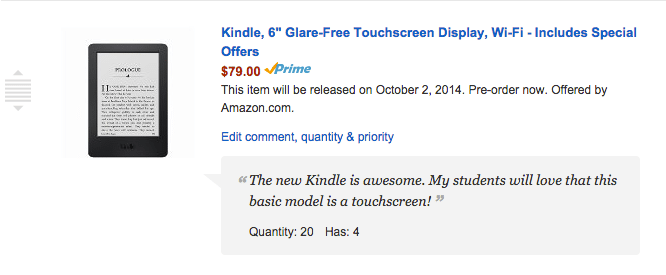
LHS is also where every single ninth grader is receiving a Kindle this year. Librarian Michele Godwin, English teacher Kathleen Large, and instructional coach Anne Nyffeler have built a strong culture of reading, and the ninth grade advisers are enthusiastic and dedicated advocates of reading. Can’t wait to see where we go!
Students entering high school are all over the place when it comes to their reading skills. Some read at the college level already, while others struggle. In general, though, they’re 1-2 grade levels behind where they need to be.
For the average student, who is a little behind, we know what works. Care about reading and invest time teaching it. Teach specific strategies of skillful readers with challenging texts, while at the same time encouraging students to read voluminously books of their choice. It’s hard, but it’s easy.
My colleagues and I have had moderate to strong success with this Reading Apprenticeship + Independent Reading approach. For students who read above, at, or slightly below grade level, the program has helped students read better, feel better about reading, and build their reading lives.
Unfortunately, what works for 70 to 75 percent of our students has not worked consistently for the lowest quarter of them. We’ve found that students who read at the third through fifth grade level do not improve at the same rate as their peers. Teacher Pam Mueller calls these students “lifers.”
This year, my colleagues in Hayward and San Francisco are working together, in different ways, to do something about this problem. Here’s a quick summary of our two approaches:
+ San Francisco: Reading Lab
After looking at the data last year, the thoughtful principal recommended built-in reading and Math intervention classes for incoming ninth graders. These small classes (about 15 students each) resemble Ms. Mueller’s class as outlined in Lifers: Learning from At-Risk Adolescent Readers and follow WestEd’s Reading Apprenticeship framework, which allows for additional reading practice and dedicated time for reading.
So far, the three sections are going very well. Last Spring, when the teachers began preparing the curriculum, they expressed concern that students would feel stigmatized being placed in Reading Lab. Not so! At all. There’s tons of joy, and so far, the students are joyfully serious.
I can’t wait to tell you more stories from Reading Lab. Social Studies teacher Marni Spitz, contributor to TEACHER VOICES, is one of the three English teachers involved in this project.
+ Hayward: Reading Cohort
Today I attended this year’s first meeting of a teacher-led study team on reading, founded last year by teacher-leader Tess Lantos. This year’s goal for the cohort, which includes the principal and teachers from all disciplines, is to learn how to meet the needs of the school’s lowest-skilled readers.
The teachers will look at the results from the reading diagnostic, which students took a few weeks ago, and each identify five focal students. Then, the teachers will administer the Qualitative Reading Inventory to gain insights about exactly where each student struggles in their reading. From there, the interventions will begin, either in small groups or individually.
I’m very excited by this approach, too, particularly because the cohort includes Social Studies, Math, Science, and Spanish teachers. It’s not a normal thing to see non-English teachers working earnestly to improve their reading instruction.
I am fortunate to work with smart, skilled colleagues who care deeply about their students. My colleagues really get how important reading is for a student’s academic success and overall well-being.
What do you think? Do you have comments or questions? Please leave a brilliant insight!
 Unfortunately, I see this all too often.