Google Docs offline is a big deal for students

favicon Google announced this week that Google Docs would now be accessible offline. In other words, you can now create and modify documents on a computer not connected to the Internet. When your access comes back, your documents are synced and updated.

This is a big deal for students. Here’s why:

1. It solves the problem of intermittent Internet access.
Many of my students have faulty Internet connections. Their service at home is spotty. Now they can keep working on their essays without fearing they’ll lose their work.

2. It really helps students with laptops.
Many of my students have a laptop as their primary computer, but it’s not always easy to find Internet access. Google Docs offline solves this problem. Now my students can just keep on working, wherever they are, and then sync back up once they have access.

Although Google Docs offline is wonderful, there are a few things to keep in mind. First, it is computer-specific. This means that your documents are viewable to others sharing your computer. Second, it doesn’t work yet on spreadsheets and presentations. This capability, I’m sure, will come soon. Third, it works only with the Chrome browser. But that’s not a big deal.

Most important, Google Docs offline doesn’t solve the problem of students who have a desktop computer and no Internet access at all at home. Those students will still have to rely on their phones.

Still, it’s pretty amazing how quickly technology is trying to deal with the digital divide. Just five years ago at my school, we were still dealing with Microsoft Word, WordPerfect, and flash drive viruses. Those were not good times. Then came Google Apps, and since then, my students’ writing skills and confidence with technology have both improved.

Here’s more information about Google Docs offlinefavicon

My vision for the Classroom Kindle Project next year

readerfavicon Most readers know that generous Iserotope readers contributed 12 Kindles last year to my students. As a result, students read more than ever before. Each Kindle has 143 high-interest books perfect for independent reading.

Despite that success, I’d like to do more next year with the Classroom Kindle Project. Here’s what I imagine:

1. Each student in the class has a Kindle. They get to keep the Kindle and take it home.

2. Students choose their own books for independent reading. The goal is to read at least 20 books.

3. Students read books for school on the Kindle. They highlight passages and write notes in the Kindle. Because the Kindles are synced to the same Amazon account, students are able to see their peers’ highlights and notes, too, and share them to the class’s Twitter, Facebook, and Findings feeds.

4. Students read newspapers and magazines on the Kindle. Every day, the New York Times and San Francisco Chronicle appear on their Kindle. On Mondays, they get Time Magazine and other weeklies.

It’s a pretty neat vision. (Don’t you think?) It’s a shared Kindle Classroom, where students read together. It’s an experiment in social reading. The classroom extends past the school’s walls. Even when they’re not in class, students see each other while reading on their Kindle.

If you’re as excited as I am about this vision, please get the word out! I’m looking for 13 more Kindles (for a class set of 25). Although I’ll take any generation, I prefer the Kindle Keyboard (formerly known as the Kindle 3) because it’s the best for students.

So please tell your friends to consider donating their old Kindle to The Classroom Kindle Project. Students will be happy. favicon

Plenty of reading on Kindles so far this summer

favicon We’ve been out of school for just three weeks, but for 12 lucky students, summer is already filled with tons of reading.

Last year, some wonderful Iserotope readers shared my obsession with reading and donated 12 Kindles to my students. Now those Kindles are on assignment for the summer, and the early reports are inspiring.

Last week, I texted the students participating in the summer program. All 12 responded that they were reading. Six had already completed one book or more. One student has finished three.

Here is what they’re saying:

+ “Thanks so much for the Kindle! I’m really reading!”

+ “I read when TV gets boring.”

+ “There are at least 10 books on the Kindle that I want to read.”

+ “I like the Kindle because I get to read what I want.”

I’m impressed by these preliminary results, and I’m hopeful that the students will continue reading this summer. My ultimate goal is to increase the Kindle collection to 25 so a full class of students can benefit.

Do you know someone who would like to donate his or her Kindle? Please let me know in the comments or by emailing markisero at gmail dot com. Thank you! favicon

Fake reading and why SSR by itself isn’t effective

 I’m a believer in Sustained Silent Reading. As Stephen Krashen (among others) says, the best way to become a better reader is to read — a lot.

But SSR is not the only answer when it comes to getting students to read more. Here are four reasons why:

1. SSR isn’t long enough. My last school carved out 20 minutes three times a week for SSR. That’s not bad. But most students didn’t take their books home and therefore didn’t read anywhere else. That means that most students completed just two to four books a year. That’s not enough. SSR needs to be daily, and we must expect students to read in other classes (and at home), too. Otherwise, reading is not voluminous.

2. SSR can have a lot of fake reading. Just because students are silent and looking at their books does not mean that they’re reading. Last year, 0ne of my students, as a joke, “read” his book upside down to see if I’d notice. If the teacher isn’t taking SSR seriously (by reading herself, by conferencing with students, by connecting students to books), then the students won’t, either.

3. It’s not easy finding good books. Many schools require SSR but don’t supply teachers with high-interest books. Students love reading, but only if the books are new(ish) and compelling. If the books aren’t interesting, it’s much easier for students to daydream or take a nap. That’s why it’s crucial for each classroom to have a rich classroom library. Classroom libraries take time and effort to build. (It took me two years to get to 500 titles.)

4. SSR programs often lack purpose. Do the students know why they’re reading? Are they talking about their reading? Is there a goal? Because our society has largely decreased its focus on reading, students may not recognize why so much school time is being invested in the activity.

* * *

I love SSR. But like everything in schools, it needs to be done well, and it needs to be part of an overall school reading plan. More than anything else, the two most important ingredients are good books and teacher investment. SSR works well if students like their books and if teachers take it seriously.

I’d love to hear your thoughts. 

Correction: Some teachers are assessing annotations

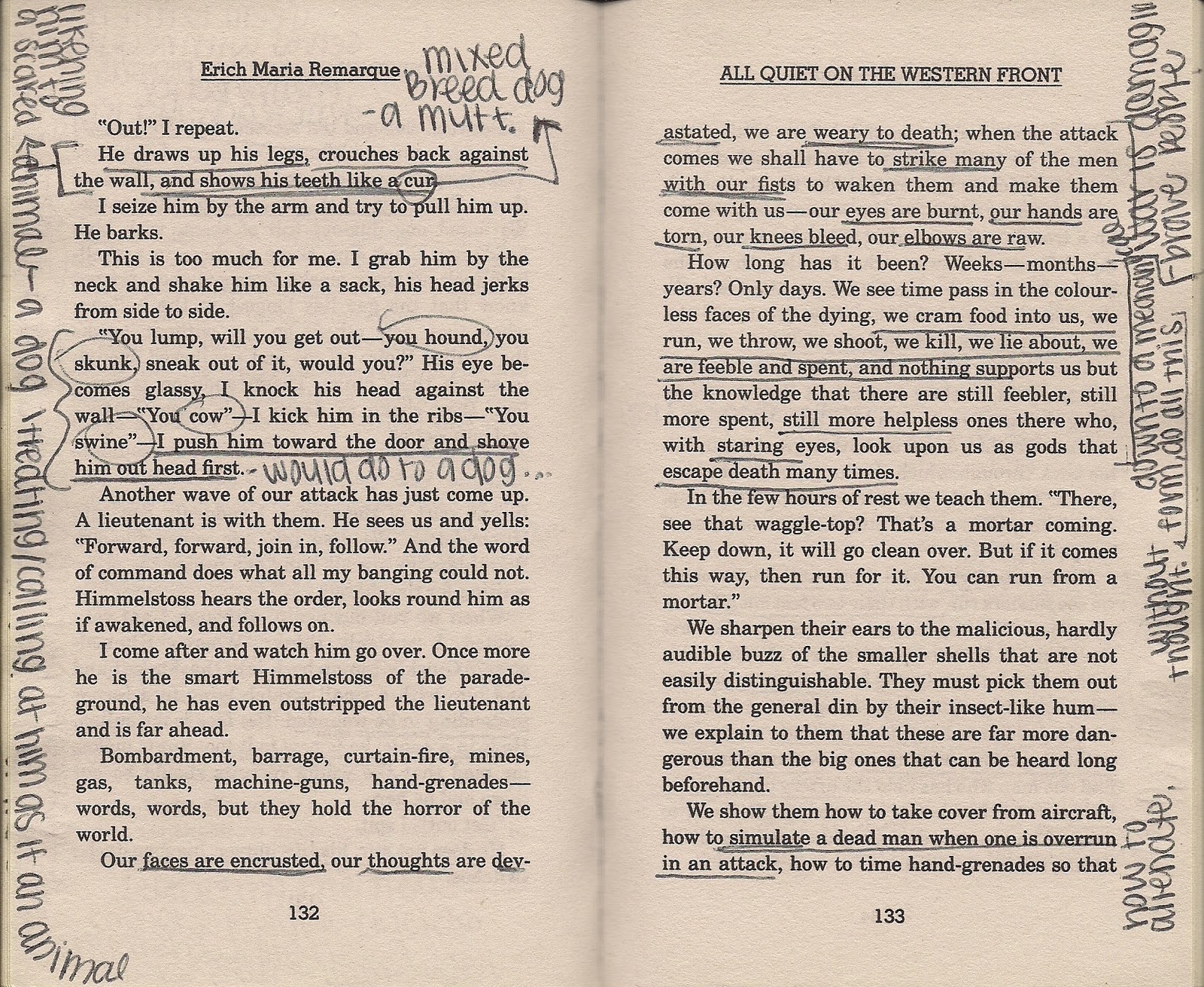
annotations A few posts ago, I wrote that teachers should begin assessing reading more directly, perhaps by looking at students’ annotations.

My assumption was that very few teachers are using annotations for formative assessment of reading.

I think I’m still mostly right, but I did find a rubric online from Achievement First, a network of charter schools founded in New Haven. Take a look.

My first impressions: It’s great that they’ve done this work, and it’s nice to know that I’m not the only crazy person out there who thinks that it’s possible to use annotations as a way to figure out how students are reading.

But I’m not sure how teachers use this rubric to assess annotations. It seems pretty general. I’d love to know more about what Achievement First is doing. I’ll contact them tomorrow and keep you updated.

Update: I received an excellent email this morning from Kurtis Indorf, Achievement First’s senior director of program strategy and design. Mr. Indorf emphasized that the general nature of the rubric was intentional. Rather than focusing on whether a student knows how to annotate, the rubric aims to assess how well the student interacts with and understands a text.

I agree with Mr. Indorf, and I appreciate that Achievement First is doing this work. We must unmask reading and make it more public. Teachers must be able to see their students’ reading as a product that they can assess. Only by making reading less hidden can we teach students how to read better.