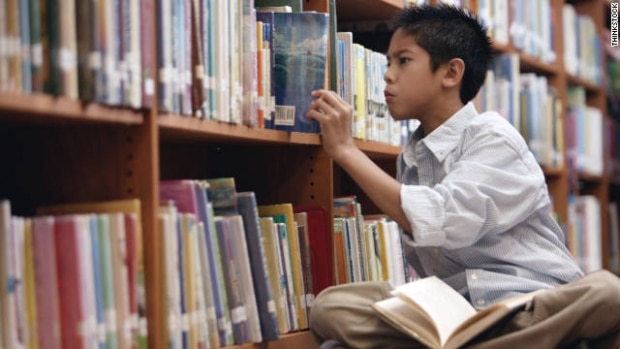
The homework debate: The French weigh in

favicon You know things are serious when the French get involved.

First, it was obesity. Why can the French eat cheese and drink wine and not get fat? (The answer: Lots of smoking, very few cookies.)

Next, it was parenting. Why are French kids so calm and respectful? (The answer: Their parents neglect them and force them to stay at the dinner table while adults eat cheese and drink wine.)

Now the French are weighing in on the homework debate, according to a report yesterday on National Public Radio. (Find the whole article in Iserotope Extras!) In the segment, Eleanor Beardsley covers the current effort by French President Francois Hollande to reform education in his country. One of his proposals: Get rid of homework entirely.

Listen to the report (about 4 mins):
[audio:http://iserotope.com/wp-content/uploads/2012/12/20121202_wesun_151.mp3]

According to President Hollande, homework creates a greater divide between the “haves” and “have-nots” in French society. Eliminating homework would offer a more-level playing field and give every French child a chance to succeed.

Instead of requiring homework, Hollande proposes, schools should have longer days. In addition, children should attend school on Wednesdays, now a weekly holiday in France.

Sounds like a good plan, right? Do more work in school and less at home?

There’s only one problem: The “have-nots” like homework and want it to stick around. Specifically, poor and middle-class parents are protesting the proposal.

One parent, Aissata Toure, says:

[Eliminating homework] is not a good idea at all because even at a young age, having individual work at home helps build maturity and responsibility, and if it’s something they didn’t quite get in school, the parents can help them. Homework is important for a kid’s future.

In other words, homework not only offers young people academic practice but also promotes important character traits like “maturity” and “responsibility.” Homework is “important for a kid’s future.” This French debate sounds like a very American one.

At the end of the report, a French magazine editor explains why rich French parents advocate for no homework. They already treat their kids to extra-curricular activities like sports, museums, libraries, music, and dance. Homework gets in the way of the higher-class acculturation process.

He’s onto something — and that’s what makes the Great Homework Debate so difficult. If we keep homework, then the achievement gap will persist — students with privilege, who know the game of school, will continue to outpace their peers. On the other hand, if we get rid of homework, then the achievement gap will persist — students with privilege will have greater access to extra-curricular activities (as they do already) and will continue to outpace their peers.

Tough one. What do you think? What are your thoughts about the homework debate? Let me know. Or check out my previous posts about homeworkfavicon

This week’s Kindle Classroom Project update

favicon It’s a busy time at The Kindle Classroom Project. Here are this week’s updates:

1. Kindle #14 arrived!
I’m very happy to report the arrival of Kindle #14. There it is, complete with attractive skin, over to the right! (Sorry for the bad lighting.) This is a great donation from Donna of Nevada. I personally like Kindle 2s because they have all the benefits of Kindle 3s (specifically, text-to-speech) and are a little bigger, which students like. After all, when you’re reading something, you want to feel like you’re really reading something. Thanks again, Donna!

2. Our Kindle library is close to 150 titles.
It’s great to get more Kindles. But as important is making sure there are good books on those Kindles.

That’s why I’m really happy that I’m getting donations to build the Kindle library. (Our latest contributor: Imene — thank you!) The money is helping me fulfill my promise to the Kindlers. I’ve told them that every month, they can request a book for the library as long as they read at least one book.

Here are of some of the books the students have requested — now on all the Kindles:


As you can tell, students do not choose randomly. They’re getting some of the most popular and the most well-regarded titles in Young Adult literature.

If you want to help our with our library, check out the Contribute page!

3. There’s a big effort to get a classroom set of Kindles.
Why wait for a classroom set of Kindles when you can get there all at once with one big project? That’s what’s happening over on my DonorsChoose page, where 19 generous people have already contributed to a project that aims to bring 10 new Kindles to the classroom.

What’s interesting is that after a great donation by Iris M. in San Diego, most donations have come from Nevada — specifically, from employees at Zappos, the major retailer of shoes, clothing and more. Apparently, Zapponians like books as much as they like shoes and customer service.

Right now, there is still $591 remaining on the project, so feel free to donate here (even if you’re not a Zappos employee).

4. Students’ reading skills are improving.
The most important goal for the Kindle Classroom Project is to promote the joy of reading. But it doesn’t hurt when students’ reading skills improve, too.

I’m pleased to announce that the students reading on Kindles are progressing at a faster rate on their reading than students reading physical books alone. We just administered our second online reading assessment today. The first one was in early September. On average, ninth graders have increased their reading score by 0.7 grade levels — an impressive figure. But Kindlers’ reading scores have gone up an average of 1.2 grade levels. If these gains continue, we’ll see two grade levels of growth before school ends next June.

Yes, this isn’t a scientific survey. Perhaps the motivation of students in The Kindle Classroom Project is higher. Or perhaps their initial reading skills were lower, thereby making it easier to improve. Right now, I don’t care about any of that. I’m just happy that students are reading a lot, having fun reading, and becoming better readers!

Please let me know what you think. I’m also looking for suggestions about next steps for the project. What would you be interested in seeing? favicon

The “What should children read?” debate continues

KidWithBooksfavicon There is a great debate happening in the world of reading instruction.

On one side, you have David Coleman, architect of the new Common Core State Standards, who believes that high school students should be reading mostly “informational texts,” — in other words, non-fiction.

Then on the other side, you have Stephen Krashen, opponent of the Common Core, who believes that students should be spending most of their time independently reading fictional texts.

In a recent piece in the New York Times, Sara Mosle, a middle school English teacher, weighs in on the debate. But instead of focusing on reading, Ms. Mosle argues that students should read more non-fiction to enhance their writing skills — that “careful reading can advance great writing.” (Check out Iserotope Extras for the article!)

Beginning with an anecdote about Malcolm Gladwell, who read 100 “Talk of the Town” articles in The New Yorker before attempting his own, Ms. Mosle notes that the best way to improve writing is by studying strong examples, which she says happens too infrequently in schools.

Ms. Mosle writes:

As an English teacher and writer who traffics in factual prose, I’m with Mr. Coleman. In my experience, students need more exposure to nonfiction, less to help with reading skills, but as a model for their own essays and expository writing.

In education-speak, these models are called “mentor texts” or “exemplars.” On this point, I agree with Ms. Mosle. Students improve their writing not just through direct instruction and practice but also through emulation and apprenticeship. That’s the kind of writing instruction English teacher Kelly Gallagher calls for in his latest book, Write Like This.

But as Ms. Mosle continues her argument, I begin to disagree. She advocates for “narrative non-fiction,” the genre that emerged from New Journalism and that has become famous over the past decade or so, thanks to Mr. Gladwell and This American Life host Ira Glass. Specifically, Ms. Mosle suggests that most English teachers are looking for “writing that tells a factual story, sometimes even a personal one, but also makes an argument and conveys information in vivid, effective ways.”

I’m not opposed to writing that is vivid. And I do not have a problem with self-expression. But let’s separate personal narratives from argumentative essays. When focusing on argument, let’s encourage students to choose precise evidence from text rather than from their personal lives.

My stance may seem rigid and my approach to writing instruction formulaic. But I worry that Ms. Mosle and other English teachers may confuse their students, particularly those practicing the basics of non-fiction. Before graduating to the advanced writing moves required for narrative non-fiction, there’s nothing wrong with mastering the basic argumentative essay structure first. favicon

Kindle #13 is here!

favicon I am pleased to announce the arrival of Kindle #13 to The Kindle Classroom Project!

There it is, in its original box, over on the right!

I can’t wait to get this Kindle prepped for the classroom. Students are now on Thanksgiving break, but come Monday, Kindle #13 will be in a student’s hands, ready for reading.

And I’m happy that it’s a Kindle Touch. I’m not picky about Kindles (they’re all great, except maybe the Original Kindle, which I no longer accept), but students tend to prefer the Kindle Touch because, well, it has a touch screen. (Young people don’t like buttons.)

This will be the third Kindle Touch in the collection.

The holidays are here, and I’m feeling some good momentum for The Kindle Classroom Project. Slowly (but surely!), the word is getting out! I appreciate all the generous donors (friends and strangers) who have contributed Kindles to my students.

But I also want to add that I appreciate the people who are connecting me to their friends and colleagues. (It turns out that there are many Kindles out there, lying around, ready to be donated!) Iserotope readers are a loyal and resourceful bunch. Because of your help, a class set of Kindles might just happen this year. favicon

Why Chromebooks are perfect for education

favicon This is an excellent post (also in Iserotope Extras!) from Steve Philp about why Chromebooks are so great in classrooms. His point is that they’re “faceless” — in other words, they’re about student learning rather than the sexiness (and expense) of the device.

Mr. Philp writes:

I wish they had more shiny about them. If only they were more complex or more difficult to setup – for example if they took a good day of technician time to setup , then, at the least, the technician would know about them. But no. Not Chromebooks. They just work. The kids use them. For learning. Boring really. There’s nothing else to say.

via frogphilp.com

Tablets (iPads, Android tablets, Microsoft Surfaces) are too expensive and gadgety to work in classrooms. Chromebooks work and they’re cheap. Yes, you need a wireless connection, a huge block for many schools. But once that happens, a lot of purposeful learning can go on without too much unnecessary fanfare. favicon