The classroom library mirroring project

favicon I’m happy to report that our Kindle e-book library has now passed the 200-title barrier!

Now it’s time to get serious about achieving one of my dreams: the classroom library mirroring project.

Have no clue what that is? Maybe I need a better name for it. Let me try to explain it.

Students walk into the classroom and see their beautiful classroom library. They browse the shelves; they look at book covers; they flip through pages; they sample first chapters; they find a book they like and want to check out. But instead of taking the book off the shelf and signing it out, students take out their Kindle and read the book there.

That’s because every title in the physical classroom library also has a Kindle version.

There are so many advantages to this mirroring project. The biggest one is that there are no physical books to check out. They never get lost. They never get worn out in backpacks. They don’t need replacement after multiple reads.

There are a few drawbacks. One is that some (but not too many) students prefer the feel of physical books. Another is that losing a book is less tragic than losing a Kindle. But I’ve found that students tend to lose or destroy Kindles (there has been one mishap since 2010) far less often than they lose or destroy books.

Now comes the hard work: bridging the gap between the 201 titles in my Kindle library and the 627 books in my physical library. It’s not going to be easy; after all, my hope is to build the physical library to more than 1,000 titles as soon as possible. That means the Kindle library will likely always be playing catch up. But that’s OK, I guess.

What are your thoughts about this mirroring project? Do you have a better name for it? Any ideas about how to make it happen? favicon
Kindle Classroom Project update, 2/26/2013

favicon It has been three weeks since the last update, and things have definitely slowed down now since the holiday Kindle donating extravaganza. There are no longer daily emails from strangers who want to contribute their Kindles to the collection.

Nevertheless, I’m very happy to report the following updates:

1. Eleven more donated Kindles brings the total to 41.

Last update, the Kindle collection achieved its first full class set. A few days later, the number jumped to 41. This is very impressive!

Susan from Nyack, New York helped the cause by donating her Kindle 2. In her email, Susan wrote that she is a professor at an urban university and that she appreciates the Kindle Classroom Project’s aim to encourage high school students to love reading. Thank you, Susan, for your generous donation!

And then, on Feb. 7, a major shipment from Amazon arrived: 10 new Kindles. Take a look at the unboxing video (featuring some students) here! The Kindles came from a DonorsChoose project that a friend (who is staying anonymous!) suggested that I propose. After she got the word out at her company, Zappos, and after the generous donations of other friends and complete strangers, the large project was funded.

2. The Kindle library is close to 200 titles.

Now at 197 e-books, up five more from the last update, we’re inching our way there. I’ve joked before that it seems easier to collect $100 Kindles than it is to gather $10 e-books. Sometimes, that’s true, and that’s why I appreciate all the people who are donating books and growing the e-book library.

After all, the Kindles aren’t enough! The Kindles need books, too.

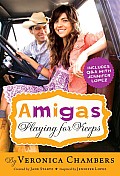
LeAnne from Fremont came through once again, this time with two more books to complete the Amigas series, a favorite among Latina ninth graders. I am very appreciative of LeAnne’s dedication. She has now donated a Kindle and four books. Very impressive! (I also like that she uses the students’ Amazon wishlist! Feel free to check it out and tell your friends.)

Here are some of the new books in the e-book library:

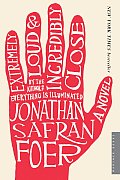
amigas anne frank extremely loud how to ruin

(I can already hear some of you. “You didn’t have Anne Frank in the collection?” Nope, sorry. There are tons of books that definitely need to be in the library that aren’t there yet. In fact, it gives me the idea publishing the current collection so that everyone can see what’s there. Let me know if you think that would be a good idea.)

3. There are new ways to donate.

Maybe I should give people badges for encouraging their friends to donate to the Kindle Classroom Project! If you’re interested, there are some new ways to contribute:

+ If you click on the bright green button on the top right corner of the blog, which reads, “Buy a Book for My Students!” you can do exactly that. You’ll arrive at an attractive WePay page that will help you make that contribution. Check out all your choices! You can even decide to give money once a day if you’re so inclined!

+ The Iserotope Facebook page (66 likes so far, and counting!) has recently been improved to offer two more ways to donate — one to contribute your Kindle, and another way to buy books.

As always, I really appreciate everybody’s commitment to this project. In a few weeks, one or two more classrooms — this time in San Francisco — will be trying out the Kindles. My hope is for the Kindle Classroom Project to be strong in at least three classrooms by the Fall.

Please let me know your questions, comments, and concerns. favicon

Google Glass stresses me out

favicon I like technology, and I like Google, but Google Glass is stressing me out.

Take a look at this video by The Verge’s Joshua Topolsky. He asks, “Doesn’t it seem weird to you that…to get people having more human interactions…we have to augment ourselves with Glass? Have we done something wrong? Like, have we screwed up somewhere fundamental?”

The end of the video (“this can help every human being” / “baby steps”) is haunting.

What are your thoughts? Is this the part where the robots take us over? favicon

What’s authentic about independent reading?

favicon When I first started out as a teacher, I was the king of authentic performance assessments. In English, when I wanted my students to read Native Son or Animal Farm, a test and a essay wouldn’t do. No way. Instead, we would have to conduct a mock trial. And it couldn’t be in a classroom. It would have to be in a real courtroom with a real judge.

The same thing was true for history. A study of World War II and the atomic bomb turned into a full-blown Smithsonian museum exhibit. A research paper about the Civil Rights led to a youth resistance symposium at Stanford University. The Great Depression and New Deal unit resulted in a community service project to combat hunger.

I still believe in authentic projects. They’re complex; they’re memorable; they get students to work on real-world problems. Even when they’re simulations, performance assessments encourage students to read, write, and think like professional adults. They offer young people opportunities to rehearse their future lives.

There are many opponents of project-based learning, particularly when it’s not done well. A few common claims: It’s not rigorous enough. It lets students avoid their weaknesses. It doesn’t hold students accountable. There isn’t enough reading and writing. Many of these arguments are valid.

In fact, over the past several years, I’ve moved away from authentic performance tasks and toward more old-fashioned teaching practices. In short, I believe in the importance of reading, and I see that our students are struggling as readers, and I feel the urgency, and I believe that the best way to improve reading is to make sure there’s tons of reading happening every day.

That’s why I care deeply about independent reading — where students get to choose what they read, where there’s a lot of time to read, and where reading is the focus of the classroom. In my opinion, there’s no better way to build highly skilled readers.

But sometimes I worry that independent reading doesn’t lend itself to authentic performance assessments. The act of reading is, of course, authentic — and so is becoming an avid reader and identifying as such. But what can I assign to my students that would demonstrate their transformation, their reading journey? What real-life issue would a year of independent reading address?

This is the part that’s missing in my thinking. I might know why I’m reading, and individual students might know what reading means to them, but why are we reading together? What’s the bigger purpose here, and how can our reading improve our community?

As I’m sure you can tell, this is a new question for me, and I would love your ideas. Please let me know your thoughts! favicon

Book review: My Beloved World (★★☆☆)

favicon I really like Supreme Court Justice Sonia Sotomayor. She’s a hero. So that’s why I was really excited to read her memoir, My Beloved World. Although her story is inspirational, Justice Sotomayor’s writing is only OK and occasionally sappy.

On one hand, the book is a perfectly solid and well-written memoir, and there are parts that are quite moving. Justice Sotomayor is an inspiration, and from the first pages, in which she discusses her Type 1 diabetes, the book’s message is clear: take what’s given to you — positive and negative — and consider everything a gift.

In particular, I really like that Justice Sotomayor emphasizes the importance of education and how crucial it was that she worked very hard as a student. Also impressive is her direct endorsement of affirmative action. Because the Supreme Court will likely strike down affirmative action this term, I valued that Justice Sotomayor recognizes that she is a successful product of affirmative action, while Justice Clarence Thomas has long repudiated the notion.

Justice Sotomayor is, of course, a wonderful person, and her American story is one that needs to be told. But at points, the writing was a bit cliche — most likely because she is still serving on the Court. You can’t quite say everything you want to say when you’re supposed to be impartial. Toward the end, there were too many mentors and people to thank and happy, organized endings. And I wish she would have discussed her time as an appellate judge. Maybe that memoir will come in time. favicon